
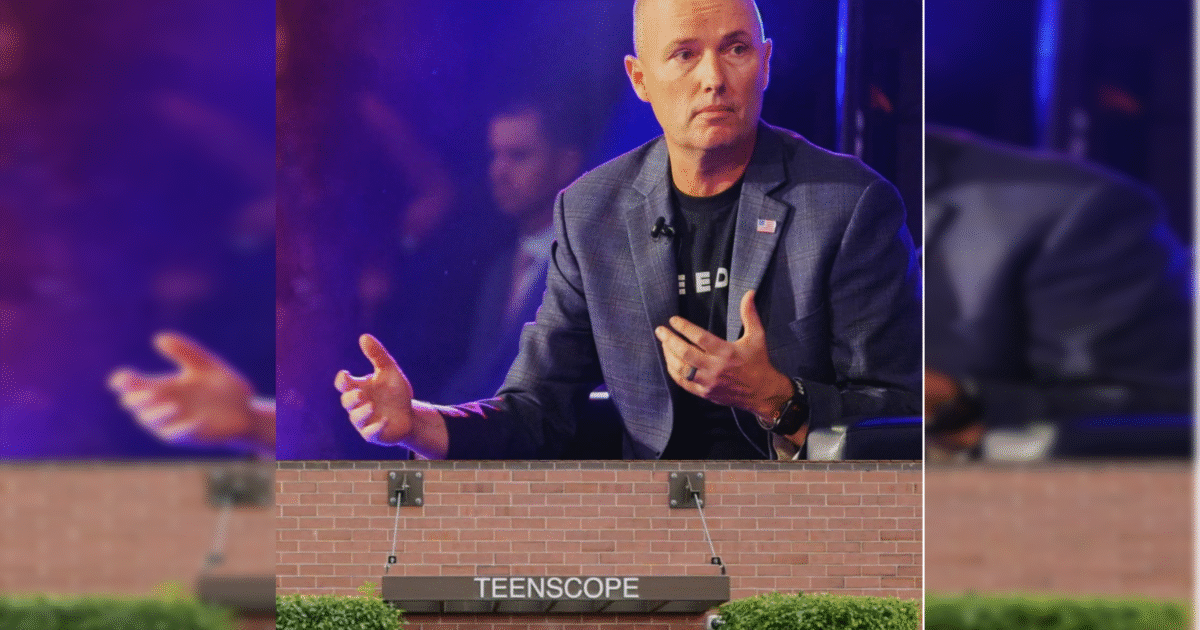


Is TeenScope Exploiting Utah’s Medicaid Children for Dangerous Psychiatric Experiments Under Governor Cox?
Republished with permission from AbleChild.
Utah Governor Spencer Cox calls the state’s Huntsman Mental Health expansion a “historic investment.” Cox never discusses how many children actually participate, or whether any of the children ever get better after participation. In other words, another state mental health program with no accountability.
There is no public record of any audit of the Medicaid money behind the Huntsman Mental Health expansion and no sign of a federal review on how the taxpayer funds were used. Under Cox’s watch, Utah has poured enormous amounts of public and private funding into Huntsman Mental Health Institute (HMHI) and its brain-research tower, while refusing to reveal the number of children that are participating in the TeenScope day-treatment program, what “treatment” the children receive in the program, or whether the children are involved in high-risk, trial-level brain procedures that no one outside the system is aware of. The National Alliance of the Mentally Ill, NAMI, funded by Big Pharma claims that 85,000 adolescents in Utah ages 12-17 have depression or anxiety. How many are being trafficked through Medicaid TeenScope? What does that consent process look like?
TeenScope is the front door. The program pulls 12- to 18-year-olds out of school into full-day mental health “treatment” run by HMHI, with groups, therapy, and drugs. TeenScope is treated as a routine part of Utah’s mental-health network, yet there is no public audit of TeenScope itself—no legislative report, no state oversight. The public has little to no information about this mental health program, beginning with how many children participate in it or how many children may be from foster care or state custody and later pushed into locked units or adult services like transcranial magnetic stimulation (TMS). Decades of operation and hundreds of millions in related investment without a single transparent, program-specific look is not oversight; it is a vacuum.
TeenScope also provides no information about the number of children who are prescribed psychiatric drugs, yet “medication management” is built into its model. The funding and power behind the program create a closed-door machine that floods children with strong mind-altering drugs and calls it “treatment.” A system that quietly rewires distressed kids with drugs and other, newer mental health experimentation starts to look like a breeding ground for unstable, troubled youth who later show up in mass-shooting headlines.
Research on similar youth programs shows that most kids in these settings are prescribed at least one powerful psychotropic drug, often several at once. That means Utah is failing to advise the public about specifics of the program, including just the number of children that participate in the TeenScope program, and how many are heavily medicated.
The scale of the investment in the program is staggering. The Huntsman family put up $150 million to create HMHI at the University of Utah, turning the old UNI facility into a new flagship for “innovation.” Lawmakers added another $90 million for a huge brain-research tower, including high-end scanners and labs. At least several million more in mixed public–private money has gone into youth crisis services that steer families into HMHI’s orbit, plus a national mental-health campaign that pushes Huntsman-branded messaging across the country.
Together, public and private money for this mental-health empire easily surpasses $300 million, yet little to nothing is reported about the children who participate in the program. One could easily conclude that when that much private cash is tied to one brain-research tower, the pressure is to chase “breakthroughs,” not protect children’s rights—so every distressed child to TeenScope or an HMHI unit risks becoming a quiet test subject.
Unfortunately, Medicaid is wired to feed that empire. Medicaid can be billed for extra days a child sits in an HMHI bed or TeenScope slot, above normal hospital rates. Under Governor Cox, the state has steered this bonus cash straight to Huntsman and Utah State Hospital for “behavioral health.” The longer children stay, the more money flows into the program, and there is no public oversight showing how much of that cash is tied to children or how many young patients are held just long enough to pull in the maximum federal dollars.
Into that vacuum step the only detailed witnesses available: former youth patients. Survivors describing HMHI youth tracks and TeenScope-linked programs report that children are treated like lab rats, controlled by rigid point systems, kept indoors for weeks, punished for small rule breaks, and pressured to accept whatever is offered. “Voluntary” often means little when saying no was framed as risking school, family, or any future help. This is what happens when a powerful institution operates without meaningful outside scrutiny and legislative oversight.
Behind TeenScope stands the brain-research tower that all the funding built. HMHI sells it as a place for “innovative” brain treatments using scans, magnets, and data. At the same time, Huntsman-backed AI mental-health bots like “Love, Your Mind” roam through kids’ games and online spaces, nudging their feelings and choices even when children think they are talking to real people. These tools can quietly train children to interact with AI “helpers” they assume are human, without clear security or informed consent for parents.
Through all of this, Governor Cox acts more like HMHI’s salesman than the public’s watch dog. Cox praises “historic” investments and signs laws that feeds increased Medicaid billing but never requires simple answers to important questions about how the children are being treated in the program, what measures are utilized to determine if the program is a success and how many children can be considered to have successfully completed the program? The numbers offered to the public are about buildings, branding, and budgets—not about children and outcomes.
Distressed children from schools, hospitals, and state systems are funneled into TeenScope and HMHI, and then turned into billing units and research material. Any move toward more extreme brain interventions on minors is buried in sealed court records and medical secrecy. Utahns can see the buildings and the money, but not the children whose bodies and futures are being used to keep the funding flowing.
Governor Cox needs to explain why there has been no oversight over this Medicaid program and when the public can expect the necessary oversight to begin. The children of Utah deserve better.
Be the Voice for the Voiceless
AbleChild is a 501(3) C nonprofit organization that has recently co-written landmark legislation in Tennessee, setting a national precedent for transparency and accountability in the intersection of mental health, pharmaceutical practices, and public safety.
What you can do. Sign the Petition calling for federal hearings!
Donate! Every dollar you give is a powerful statement, a resounding declaration that the struggles of these families will no longer be ignored. Your generosity today will echo through generations, ensuring that the rights and well-being of children are fiercely guarded. Don’t let another family navigate this journey alone. Donate now and join us in creating a world where every child’s mind is nurtured, respected, and given the opportunity to thrive. As a 501(c)3 organization, your donation to AbleChild is not only an investment in the well-being of vulnerable children but also a tax-deductible contribution to a cause that transcends individual lives.
The post Is TeenScope Exploiting Utah’s Medicaid Children for Dangerous Psychiatric Experiments Under Governor Cox? appeared first on The Gateway Pundit.