

 When reports of the brutal Venezuelan gang Tren de Aragua first appeared, Democrats denied its existence, claiming it was an anti-immigrant myth perpetrated by Republicans. That denial began to unravel after the Aurora, Colorado incident in August and September 2024, when video surfaced showing armed men inside an apartment complex.
Governor Jared Polis’s office initially dismissed claims of an “invasion,” with a spokesperson saying the narrative was a “feature of local officials’ imagination” and suggesting the allegations were being used for political theater.
Several mainstream media echoed that dismissal, describing Tren de Aragua as a new “bogeyman” or even a hallucination. While acknowledging the gang’s existence, they argued that reports of organized violence amounted to a fabricated “invading army” narrative designed to fuel anti-immigrant sentiment and justify mass deportations.
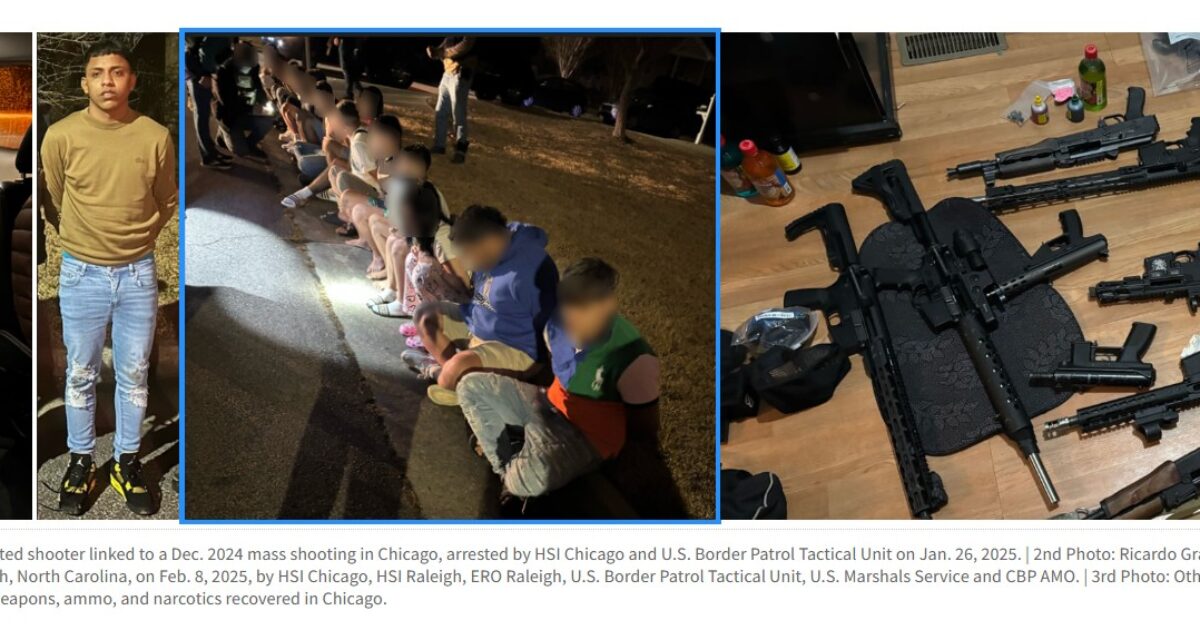
In reality, the gang is very real and has been brutally torturing and killing people while also taking advantage of federal and state benefits programs. ICE has been arresting its members and leaders, but those cases receive little attention from the mainstream media because they do not fit the narrative.
Last January, a 58-year-old woman in Burien, Washington, just south of Seattle, was kidnapped from her apartment complex by two illegal aliens, Alexander Arnaez-Gutierrez and Kevin Sanabria-Ojeda, who have confirmed ties to the Tren de Aragua gang. The attackers tortured the victim by using a power drill on her hand to force her to reveal her ATM PIN and the location of her jewelry. They also beat her and eventually shot her before leaving her for dead. The woman survived by playing dead until help arrived.
On January 8, 2026, ICE arrested an illegal alien, Venezuelan national, and confirmed Tren de Aragua gang member, Yorvis Michel Carrascal Campo, in Colorado Springs on charges including murder, racketeering, and drug trafficking tied to crimes in New Mexico. According to a federal indictment, Carrascal Campo participated in the June 2024 kidnapping and killing of a man and helped conceal evidence of the crime. The victim’s body was later hidden in a remote area of New Mexico.
Under President Trump, federal investigations into Tren de Aragua have focused on how the gang exploits migrant infrastructure by embedding itself within legitimate support systems run by nonprofits and funded by the federal government. While these programs are intended to provide humanitarian aid, investigators say Tren de Aragua has used them as hubs for recruitment, logistics, and criminal activity.
Federal agencies and congressional committees have focused on multiple locations where Tren de Aragua established footholds, most prominently New York City’s Roosevelt Hotel. FEMA and DHS opened investigations into claims that Tren de Aragua–linked groups, including Diablos de la 42, were operating out of city-run shelters.
In February 2025, FEMA’s acting administrator revoked $80 million in funding for New York City’s Shelter and Services Program, citing concerns that the funds were inadvertently facilitating illegal activity, including drug sales and sex trafficking.
Those concerns were reinforced in April 2025, when federal prosecutors in the Southern District of New York unsealed two superseding indictments charging 27 current or former Tren de Aragua members and associates, along with members of its splinter faction Anti-Tren, with racketeering and a wide range of violent crimes. The charges included murder, shootings, sex trafficking of women smuggled from Venezuela, drug trafficking involving tusi, armed robberies, extortion, firearms offenses, and obstruction of justice.
Twenty-one defendants were already in custody or arrested in coordinated operations across multiple jurisdictions. Prosecutors described Tren de Aragua as a transnational criminal enterprise that used extreme violence to control territory and exploit trafficking victims, while Anti-Tren carried out similar crimes and retaliated violently against the parent organization. Officials said the case marked the first time Tren de Aragua was charged as a racketeering enterprise in New York under Operation Take Back America.
Parallel enforcement actions unfolded in Colorado, where federal prosecutors charged 30 individuals, including alleged leaders and members of Tren de Aragua, following a nine-month investigation that began with violent crime and drug activity at a Denver-area apartment complex. That probe expanded into a broader case involving drug trafficking, murder-for-hire, and firearms offenses across the state.
A 39-count indictment charged 28 defendants with firearms trafficking, possession of weapons by illegal aliens, using firearms in drug crimes, and conspiracy to commit murder-for-hire. Investigators recovered 69 firearms, including automatic machine guns, many linked to shootings in Denver and Aurora, including carjackings, robberies, and drive-by attacks. A separate indictment charged two additional suspects arrested in Colombia with conspiracies involving firearms trafficking, drug trafficking, carjacking, and murder-for-hire.
Investigations in Colorado also revealed how Tren de Aragua embedded itself inside migrant housing infrastructure, particularly in Denver and Aurora, where apartment complexes such as Whispering Pines and Aspen Grove became focal points of federal RICO cases. Gang members lived alongside legitimate asylum seekers, using these properties as operational bases for crimes including ATM “jackpotting,” extortion of other migrants, and coordination of broader criminal activity. Investigators found that inadequate vetting allowed gang members without U.S. criminal records to enter shelter systems as vulnerable migrants, only to later convert those spaces into criminal hubs.
At the federal level, the House Committee on Homeland Security launched a sweeping probe into more than 200 NGOs that received taxpayer funding to assist migrants during the Biden–Harris border crisis. Lawmakers are examining whether federal grants intended for food, lodging, transportation, and legal aid created a magnet effect that gangs exploited to move members across the country and embed them in migrant support networks.
A 2024 DHS Office of Inspector General report raised alarms about insufficient oversight, noting that more than half of audited FEMA funds could not be fully accounted for due to poor documentation. Committee leaders demanded detailed disclosures from NGOs regarding federal funding, services provided to illegal aliens and unaccompanied minors, legal advocacy against the federal government, and any involvement in advising migrants on how to avoid immigration enforcement.
Authorities say Tren de Aragua has grown increasingly sophisticated in masking its operations behind legitimate fronts. In Venezuela, the gang reportedly funded a nonprofit called Somos El Barrio JK as a public-facing cover, and U.S. investigators are tracking similar attempts to use small community groups or rehabilitation-style organizations to secure housing and funding. A major DOJ indictment in late 2025 charged dozens of Tren de Aragua members in a multi-million-dollar ATM malware scheme that allegedly used shelter addresses as safe houses and logistical nodes for storing hacking equipment.
A central focus of current investigations is what officials describe as predatory settlement. Tren de Aragua follows migration flows into new communities and extorts Venezuelan migrants through neighborhood fees, forced protection rackets, and intimidation of migrant-run delivery and ride-share workers, using violence or the threat of violence to maintain control.
First, Democrats denied that Tren de Aragua even existed. Now they are fighting to prevent its members from being deported while vilifying ICE, the agency working alongside the FBI and IRS to dismantle the gang.
The post Tren de Aragua Brutally Tortures and Kills Innocent People While Benefiting From Federal Funds appeared first on The Gateway Pundit.