
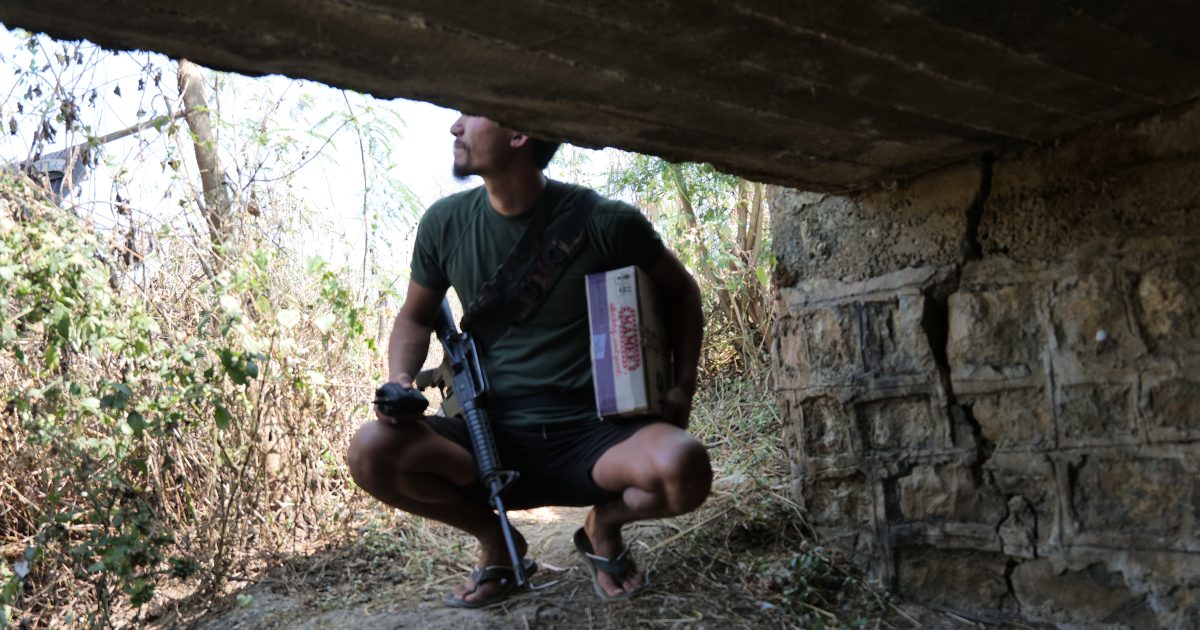


The revolution began when most of these young men were around 14 years old, forcing them to leave school behind. While visiting a bamboo university the other day, the director told me that girls now outnumber boys in higher education by three to one. “Boys would rather pick up a gun and fight for our country,” she said. Wasted time and a loss of purpose have destroyed more lives in this war than bombs ever have.


Where some of the holes looked lonely, others were overcrowded. But there was always a pervasive feeling of discomfort and close quarters. Weapon maintenance helps fill part of the day, both to fend off boredom and as a practical necessity to ensure weapons will fire when needed to ensure survival. The nonstandard uniforms—soccer shirts and gym shorts—underscore the ad hoc nature of the resistance.

The past ten days have been relatively quiet. Normally, the sounds of explosions are constant, but in the past twenty-four hours there have been only one or two. It is possible that the Tatmadaw is preparing for a major attack. If so, these guys will spring to life with renewed purpose, as they have time and again in the past. If not, they will sit and wait, sleep, and live in discomfort while worrying about their families in internally displaced people’s camps, dreaming of the day they can come down from the mountains and no longer need to protect their homeland from their own country’s government.

The post Exclusive from the Burma War: Life on the Front Lines appeared first on The Gateway Pundit.